Who is Elena Rabkina?
Elena Rabkina is Belarusian artist focused on photography and interactive art.
Elena researches and documents the immaterial story of people, things and places, pays attention to the small real-life details and explores the current meaning of the mass culture. Her artworks have social commentary and reflect on agism, social inclusion, urbanism, ecology, mental health, migration, activism.
Left Belarus in 2020 due to the political repressions, lived and worked in Odessa, Ukraine till the beginning of the war, and now is in Europe with no particular residence. Apart from being an artist, Elena is a social activist, co-organizer of urban and art festival Vulica Brasil and mentor for social and art projects.

CV AND BIO
-
2021 - Speaker and Mentor at the Contemporary Art Festival "CONNECT" in Mykolaiv, Ukraine.
-
2017 - 2020 - Organizer of the Urban and Art Festival «Vulica Brasil». Minsk, Belarus.
-
2020 - Speaker at the Art Laboratory in Belastok, Poland.
-
2020 - Speaker at European Architecture Student Assembly in Grushevka, Belarus.
-
2019 - 2020 – Speaker and mentor at the Collabex Art Accelerator. Minsk, Belarus
-
2019 - Participation in the Nantes Forum of Creative Generations. Nantes, France (was awarded with the grant).
-
2019 - Run game "Animals" at Burning Man, Black Rock City, USA.
-
2017 - Nominated for RADA Awards in the category Best Art Project with the project Blind City. Minsk, Belarus.
-
2017 - Awarded 2nd prize at Photo Competition by the Embassy of Sweden.
-
2016 - Speaker on TEDx, Belarus.
-
2015 - Worked at ikonoTV, mute TV that was developing the direct language of art through slow videos. Berlin, Germany.
-
Born in 1989, in Vitebsk, Belarus. Attended Vitebsk Art School from 2003 to 2005. In 2011-2012 took part in the year-long course on the art of photography, created by Belarusian photo artist Alexander Veledimovich.
-
In 2013 was representing Belarus at «Photo Intercultural Marathon», Beysehir Konya, Turkey. It resulted in the participation in the open-air exhibition. Elena presented a collective photo-installation work about social inclusion and agism in Turkey.
-
From 2013 to 2016 I was working on the photo project «Motion to Emotion» dedicated to the topic of objects and memories that they carry along with different places you travel to (exhibited at Photozone, Minsk, Belarus in 2016).
-
In 2015 created the photo project “City Inside” that studies the relationship between people and the city, as well as a way become closer through a joint experience.
-
In 2016 Elena Rabkina created work “Moreless” as a part of "Concrete Delusion" project. It included sound, installation and series of photos that and was dedicated to opening up new possibilities for the aesthetic interpretation of political and industrial progress. In 2016 the project was exhibited at the National Center for Contemporary Arts (Belarus), at SÜDBAHNHOF fotografische Werke (Germany), in 2017 at the Mark Rothko Art Center (Latvia).
-
In 2017 the work "I see you, I miss you" was awarded 2nd place by the Embassy of Sweden, and exhibited in Minsk as part of an exhibition dedicated to the Week of Sweden. The photo series is dedicated to the feeling of nostalgia about something you’ve never seen for yourself, but have awakened thoughts and fantasies about.
-
In 2017 also was created the photo work "Black stories» about the ecological situation a Bali and transformational power of nature. The photo series was exhibited in 2017 at PhotoZone, Minsk, Belarus.
-
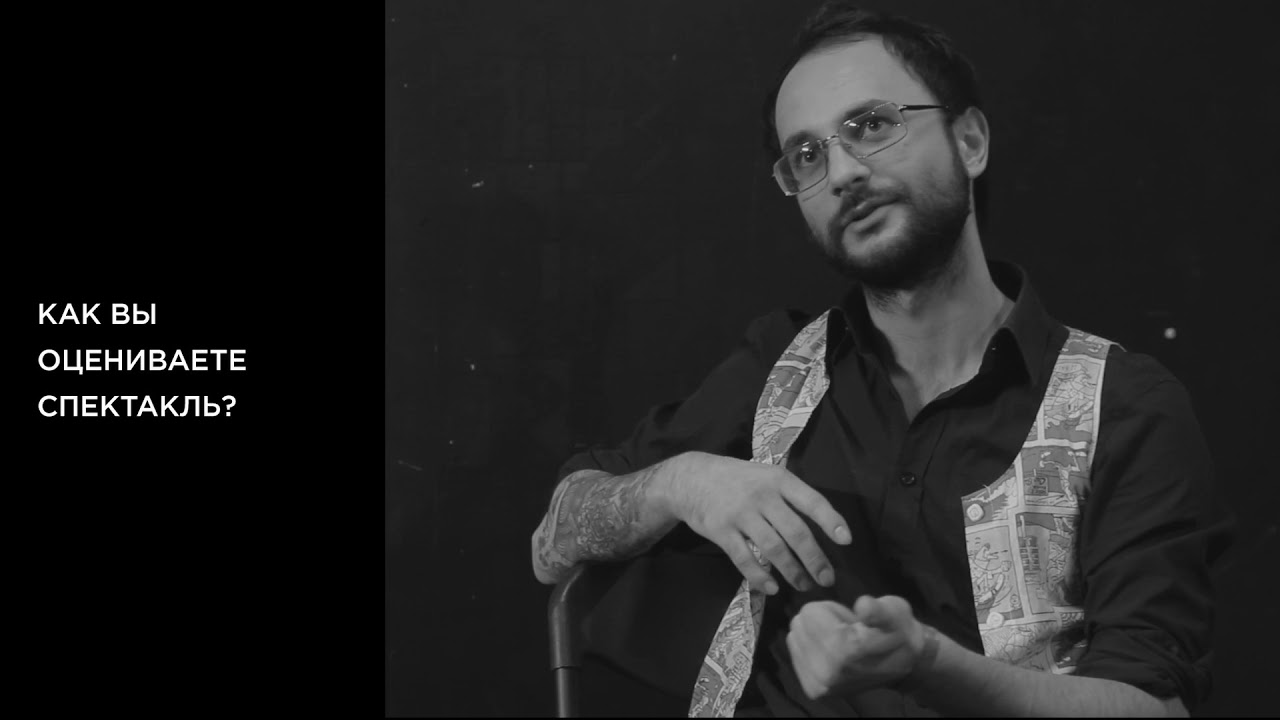
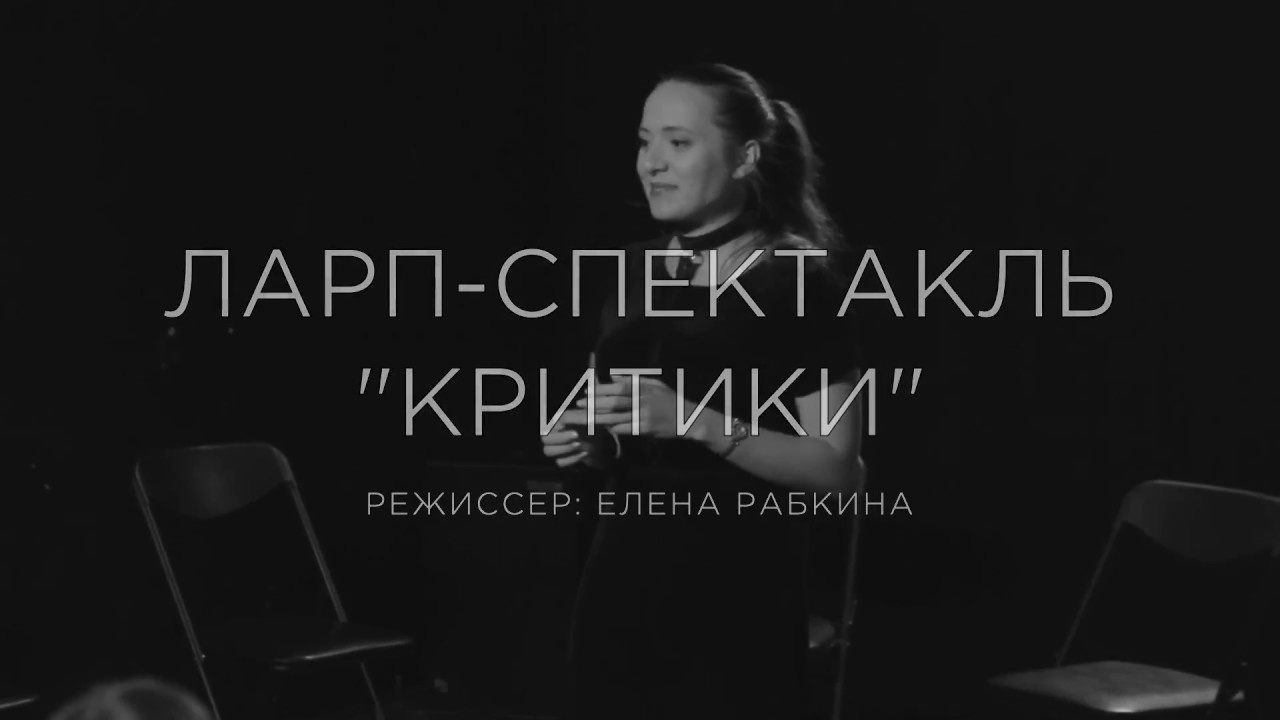
In 2017 Elena directed at staged an interactive performance larp-play “Critics” at the Center of Belarusian Dramaturgy (Minsk). The main topic was subjective and objective in art, a paradigm shift in the perception of expert opinion by society.
-
In 2019 Elena took part in the collective portrait photography exhibition “Youth”. Exhibited at Background, Minsk, Belarus.
-
In 2020 due to the persecution by Belarusian government because of political activism Elena had to flee Belarus and moved to Ukraine.
-
In 2021 she took part in the art residence Artivism and Solidarity – the Department of Social Illustration and Public Art. As a result she carried out a research and developed a board game about mental health and burnout. Odessa, Ukraine.
-
In 2021 Elena in collaboration with Alexander Uriev created a photo series about the Belarusian refugees that fled the regime of Lukashenko and settled in Odessa. The project consists of a series of interviews and portraits.
-
In 2021-2022 Elena took part in the art residence from MediaLab Fem “Her deed” and produced a photo series and interview about the urban activist Daria Pugacheva, who’s work was dedicated to the renovation of the soviet fountain in Rovno, Ukraine. This work was exhibited in 2021 at the main square of Lviv and Lviv Municipal Art Center, as well as in Dnipro Center for Contemporary Culture, Ukraine in 2022.
ARTIST STATEMENT
I have an unstoppable desire to explore, look deeper and connect to the everyday life in different corners of the world. With my photography I try to grasp moments that are ethereal, can be only read between the lines and rather felt than seen.
As an artist, I mostly gravitate towards the topic of urban-people relationships. Every place, be it a room, building or the whole city has the energy of its own, its tempo, habits, good and bad, its rules and experiences. The charisma of the environment is built by people, but also it affects people back, as a never-ending circle.
I believe that an attentive eye and open heart can you far in experiencing the precious elements of everyday life. And I use photography to bring these stories to a wider audience.
PORTFOLIO
PHOTOGRAPHY:
| HER DEED | SEA HEALS | BLACK STORIES | YOUTH | MORELESS | CITY INSIDE |
| MOTION TO EMOTION | INVISIBLE PEOPLE | STILL STANDING |
INTERACTIVE ART:
| FALLING | 14 CONFESSIONS TO THE CITY | BLIND CITY | THE CRITICS |
Falling, 2022,
Frankfurt (Oder), Germany


The work covers the topic of the war in Ukraine and visualises the data on the amount of rockets that have fell on the Ukraine, according to the latest statement by Vladimir Zelenskij. 300 knifes represent less than 10% of the bombs, but after each of them stands destruction and pain. For our brain it’s hard to see the difference between 2500 and 3000, though the difference is immense. This piece is created for the European audience that is not affected by the war, but is eager to learn and reflect on the scale of the tragedy. Visitors are invited to interact with the piece by stepping on the platform and raising the bombs. Yet, when one steps away – the knifes come back in their position.
Idea and concept by Elena Rabkina.
Construction: Elena Rabkina, Sofia Brem, Ilda Kurti, Orest Dovhan, Yuliia Trymorush, Robert Schwaß, Nathan Rubene dos Santos, Nicoleta Jantoan, Oleksandr Klymenko.
Mentorship: Tobias Schmitt, Mauricio Sosa Noreña.
Still Standing, 2022,
Vasenthien, Germany


The work "Still Standing" is dedicated to the unbreakable spirit of Ukrainian people. Apart of being the typical plant in Ukraine, no matter the conditions – sunflowers will always tend to keep their heads high and reach the sky. It is also typical in Ukrainian villages to use bandaging in sunflower seeds harvest, so that the seeds don't fall out.
Performance "Still Standing" develops the topic of the war in Ukraine and incorporates artist's personal experience of being the Red Cross Odessa volunteer. Elena became a volunteer in 2020 in need of legalisation in Ukraine after running from the regime of Lukashenko in Belarus. The main condition for the volunteer was to finish the Entry Volunteer Course on the First Aid.

14 Confessions to the city, 2022, Vienna, Austria
Public art project "14 Confessions to the city" is done in the form of an open diary. Coming as a new person to Vienna I have the luxury of being completely honest to the city, as it's always easier to talk to strangers. So I've placed around the city 14 confessions, as well as located the empty boards for others to confess.
Being a Belarusian artist that lived in Ukraine before the war, I speculate about going through this experience, politics, charisma of Vienna and some accumulated insights.
After the public exhibition on the streets Vienna's 2nd District, the boards are to be collected and exhibited at Superbude on the 7th floor as the recurring exhibition. Guests of the hotel will have an opportunity to send their confessions and once a month I'll reveal one new saying.
This project explores the relationship between vulnerability and publicity, as well as allows viewers to get a glimpse of my refugee experience though self-reflection.


Meet the artist
About the project


INVISIBLE PEOPLE, 2022, VIENNA, AUSTRIA
"Invisible people'' is an interactive photo-documentary project by Elena Rabkina, who was staying at Superbude as part of the "Artist in Residence" program and the "Question Me & Answer Art Residence".
Visitors are invited in an interactive way to discover the staff behind the scenes of the hotel and speculates on the topic of diversity, inclusion and labor migration in the environment of the Austrian hotel industry.
“When I got to visit the employee cafeteria at Superbude - I was so impressed with the people there. There was such a diversity of cultures and ethnicities. There were people from countries I'd never met before, and everyone was so different and charismatic! So I decided to take a look behind the scenes at Superbude and pay my respects to the people who create it every day, as in most cases, multicultural staff remain unseen or fall into the blind spot”.


The interactive photo series “Invisible People” took its permanent disposition at Superbude, Vienna. Please come and find the hotel workers that make this place amazing at -1 level.


HER DEED, 2021, ROVNO, UKRAINE
-
This work was exhibited in 2021 at the main square of Lviv and Lviv Municipal Art Center, as well as in Dnipro Center for Contemporary Culture, Ukraine in 2022.
Art Resindece Media Lab Fem brought together 10 Belarusian and 10 Ukrainian photographers. Each of us worked on the documentary photoseries about female activists and an interview or an essay.
I chose to tell the story of Daria Pugacheva, a performance artist, who has returned to her hometown to take part in the first Contemporary Art Rivne art residency in Rivne. And was doing my photodocumentaty research living closely to her for the whole week of reading this project.
To draw attention to the condition of the fountains in the city, Daria performed "I will wake up when this fountain is filled." Residents of the city were also able to take part in the artwork, sharing their memories of the fountain and ideas about its future. And after the performance, Daria submitted a petition to the city hall calling for funds for the reconstruction of the fountain.
In the context of her performance, Daria shares her thoughts on the impact of art on people the urban space, and talks about the path of an artist.


SEA HEALS, 2021, ODESSA, UKRAINE

Soundtrack: Sounds of the Sea + Quotes from the interviews
On 9th August 2020 Alyaksandr Lukashenka went to his sixth presidential term after rigged elections, and mass violent protests began in Belarus. On the night of August 9-10, grenades began to explode in Minsk and shots were heard. From that moment on, the confrontation between security officials and ordinary citizens in the country does not stop - people are fleeing the country en masse, almost 5,000 criminal cases have been initiated, more than 600 people are recognized as political prisoners, hundreds more remain in the dungeons of isolation wards and prisons.
The Belarusian authorities are persecuting doctors, journalists and teachers. “Akrestsina” - the name of the street on which the detention center in Minsk is located - has become synonymous with monstrous torture and rape. A year later, Alexander Lukashenko continues to receive Russian loans and remains in the presidency, although many countries do not consider him president. The project examines the process of emigration of Belarusians to Odessa, associated with protests and political events in 2020-21. The Belarusians who survived the clash with the security forces, detention, and persecution are forced to look for a new home.
These people chose Odessa to feel safe and recuperate.
In this photo project, on the one hand, we want to show the history of transformation, spiritual changes through which a global number of people go. In 2020 alone, more than 30 thousand people left Belarus. On the other hand, we do not want to hide behind the tragedy of these circumstances and look closely at how representatives of the specific Odessa community of Belarusians feel and evaluate their experience. The photo series consists of portraits of Belarusian refugees in the water of Black Sea – the highlight of Odessa and a number of interviews about the idea of home, immigration and self-reflexion in this context. And plays with the familiar concept within our culture that sea heals all the wounds, both physical and emotional.
The project is complete in artistic duo with Aleksandr Uriev.
BLACK STORIES, 2017, BALI, INDONESIA


-
In 2017 this work was exhibited at PhotoZone, Minsk, Belarus.
Bali is a recognized center of spiritual development and growth in the Asian and European worlds. Unfortunately, even the most special place is not immune from being littered with garbage, both mental and real. However, even here there is a transformation. Nature turns from an object of activity into a subject, creating its own compositions from what came to hand.
The photo project "Black stories" was made on about. Bali in 2017 in a unique location with black volcanic sand. During the rainy season, the current goes around the nearby beaches of the island, collects all the contents, and then throws it onto the black coast of Blacksand Beach, creating unique compositions.
YOUTH, 2018, MINSK, BELARUS

-
In 2019 this work was exhibited at the collective photography exhibition “Youth” at Background, Minsk, Belarus.
Photo project «Youth» includes portraits of young people in Minsk and explores their relationship with the city.
Darya, Officers’ House Hall
When I met Darya, she was already rushing somewhere, without giving herself a chance even to arrive first. She was like a stream of wind – fresh, strong and unstoppable.
- So we are ready? Well, let's begin. Oh, no let me smoke first.
I usually come here to make a call, have coffee, wait for a friend, smoke a cigarette. For me, the platform behind the House of Officers is an express power bank, a place of rapid recovery. I race over here for 15 minutes and usually stay for a minimum of 40, which feels like 2 hours.
First of all, here I feel as suspended as possible. It's like I 'm being placed in a grey box of columns, stucco, and another decor. They give you a chance to look at the city and get some breath. Get some rest, baby girl they say.
Secondly, well, it's a powerful place, guys, powerful. Here I feel the city as much as possible. I'm in the heart of it but protected. I don't hear cars, but I know what they are, here behind the wall, I feel it. I don't see people, but they're waiting for me around the corner, all you have to do is solemnly get down that ladder. For me, time here stops, but I know exactly when I should leave.
And for the third, well it's a beautiful place, guys, beautiful. I like to come here in overcast weather when the sky gets the color of these walls, truly grey and the air is really cold. That's when it's truly solemn, quiet, calm. Everything I love and what's missing, it's all here. Then Darya notices a bench that is about to be thrown away or maybe already is. Let me sit and smoke here, and take a pic, all this rubbish suits me well.
THE CRITICS, 2017, MINSK, BELARUS
-
In 2017 this work was performed at the Center of Belarusian Dramaturgy, Minsk, Belarus.
Play "The Critics" is an interactive art experiment on the verge of larp and theatre, combining the traditional form of the performance and the role-playing game of live action. Spectators are direct participants in the performance, who have their own tasks. In some ways, a larp performance can resemble a happening or an immersive performance.
The theme of the performance is subjective and objective in art, a paradigm shift in the perception of expert opinion by society. The performance removes the wall between the actors and the audience, the participants are in a constant process of influencing each other. People sitting in the hall cease to be observers and become full participants in the performance.
Another feature of the larp performance is that it does not have a rigidly prescribed script, everything happens here and now. And the outcome of the performance depends both on the choice of the actor, and on the degree of influence on them from the audience.
MORELESS, 2016, MINSK, BELARUS

-
In 2016 the project was exhibited at the National Center for Contemporary Arts (Belarus), at SÜDBAHNHOF fotografische Werke (Germany), in 2017 at the Mark Rothko Art Center (Latvia).
Nature lies at the beginning of every transformation. Human is a part of nature, and it existed even before the first human appeared. Centuries after centuries mankind was developing construction skills and materials. So in 4th century B.C. they invented concrete that was meant to destroy or at least suppress the nature landscape and set its own rules. The conflict of nature and concrete is endless: we cut out forests to build new houses, we lock grass and soil in concrete to make new roads. Here in Minsk they removed park zone to build a new hotel. But locking ourselves in concrete box is not endless.
Nature slowly step by step gets back in its power: grass is breaking through roads, concrete blocks get ruined by rain, wind, plants. And finally when human doesn’t fight back all these abandoned concrete objects get under the power of nature. Everything goes in circle: mankind builds more concrete objects, suppressing the nature and then nature destroys them. If we look into the origin of this conflict, one can see that it’s a true fight of life and death. On one side we see all the green plants with true desire to grow and flourish and on the other side artificially made concrete blocks that doesn’t suppose to create any life or growth, just to preserve things as they are.
What I looked into while working on my project, are cases, where concrete objects and nature managed to find balance and live in harmony without any fight or competition. I want to prove that even if we have two absolutely contradictory origins, it’s possible to find a balance. And if it is possible for such confronting worlds, what is about humans, who basically are the one species.
I suggest giving yourself time and look into this conflictive nature of plants and concrete. To improve focus and ability to feel the harmony, viewers are very welcomed to put on headphones and listen to quietness of the landscape, notice small changes in sounds and try to feel the fragile balance that exists between these two worlds.


CITY INSIDE, 2015, HONG KONG
I was in Hong Kong as a tourist, I lived here a casual life, and at some point the question whether I am to move there or not became really sharp. So I wanted to figure out, how people that live there feel and what storylines Hong Kong has to offer. I asked people to bring me to their special place in Hong Kong for any kind of reason (where they feel the special way and which on has a special emotional connection to them) and explain why as simple as possible. And this is how photo series «City Inside» appeared.
«City Inside» bright together the stories of immigrants and locals, people of different nationalities, religions, physical abilities and allows to befriend Hong Kong through a joint experience. It focuses on subtle matter, on the context and value that we endow the environment around us. In part, this is a way to revitalize the city and create an opportunity to build relationships with it by reading what relationships the project participants have already built with it. And on the other hand, this is a way to build invisible connections with the participants in stories, because we walk the same streets and belong to a single whole space.
Immersing in stories, the reader has the opportunity to look inside the lives and experiences of the participants, to understand how different people see the city and what they value in it, to become someone else for a moment, which means they will come closer to understanding and acceptance. A city can be a very personal space, and it is the desire to personally relate to it and its inhabitants that can bring us closer, improve the emotional climate and the overall well-being of the space.
MOTION TO EMOTION, 2013-2016


-
In 2016 the project was exhibited at Photozone, Minsk, Belarus.
I am a sentimental person and I really want to remember as much as possible all the happy moments that happen to me, and, accordingly, to share this happiness. I want to remember exactly the details - what I did, what I planned, how I felt. I want to have a chance to emotionally absorb my experience and recreate one day in another city through the things in my bag.No matter how hard we try, in the turmoil of days and an eventful life, the memory of travel is gradually erased, and with the help of these detailed photographs you can go back in time.
This exhibition can be regarded as a personal diary, as a memo for a traveler, and as an alternative map of the world. The final photo series consists of 25 photos in different cities from 18 countries shot in 2013-2016.